




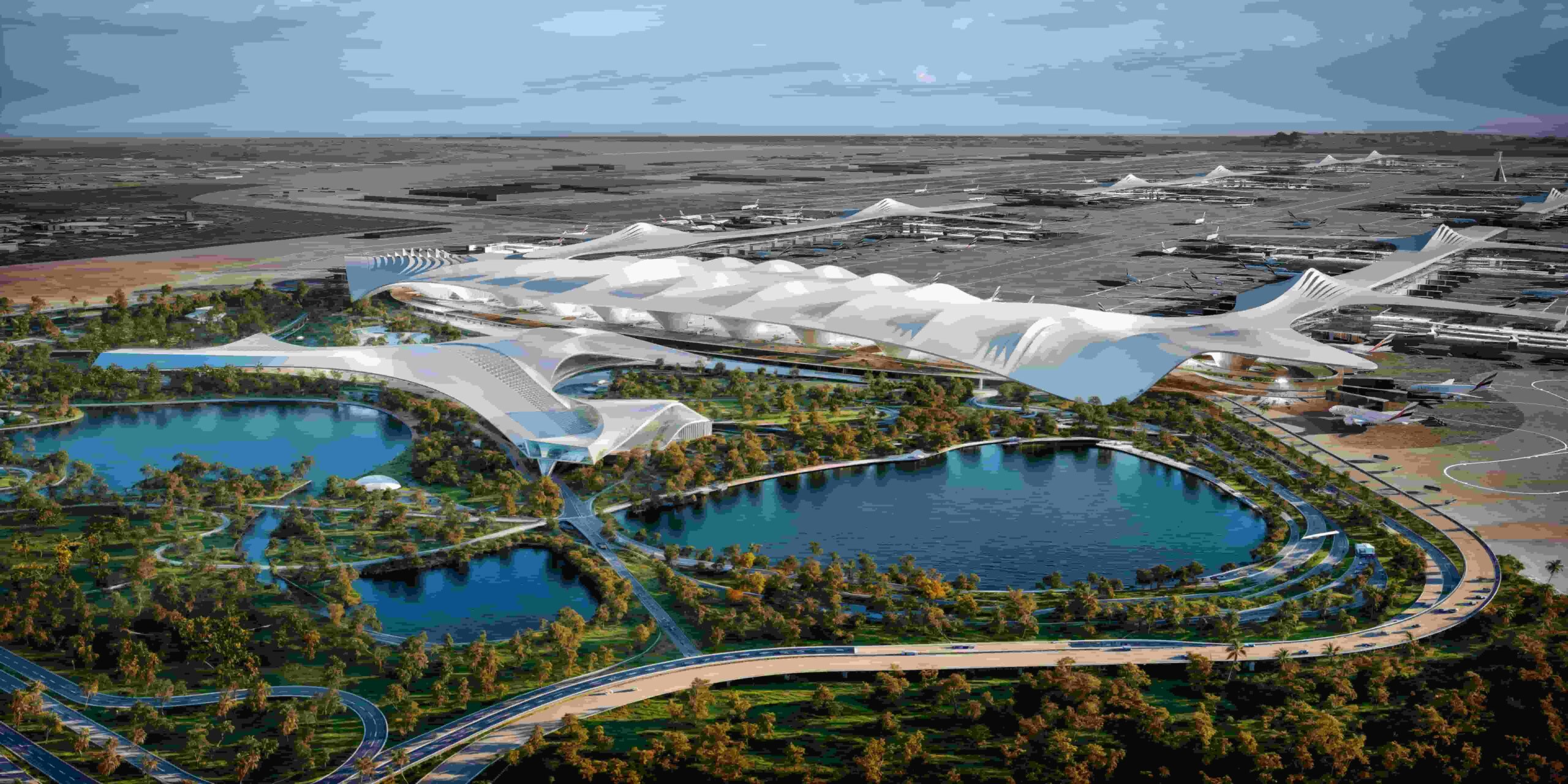
Dubai’s next big move in aviation is taking shape, and it’s set to change the way we travel. Al Maktoum International Airport (DWC) is being developed into what could soon become the largest and most advanced airport in the world. The first phase alone is worth around USD 35 billion and is packed with groundbreaking features aimed at creating a smooth, tech-driven travel experience.
Here’s a look at seven of the most exciting innovations being built into the new DWC terminal:
1. No Immigration or Check-In Counters
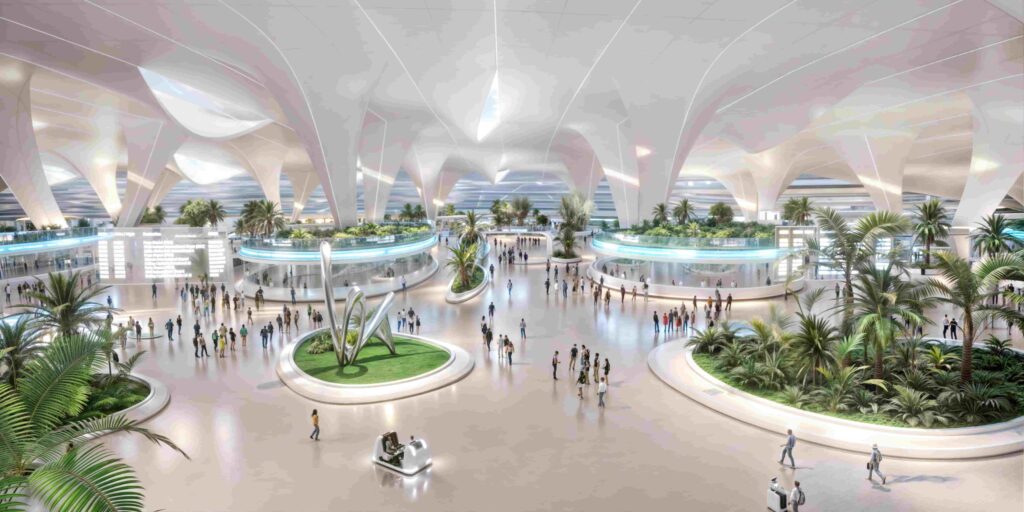
Say goodbye to waiting in long lines. Al Maktoum International will operate with a “seamless and borderless” processing system. Thanks to biometric identification and AI, passengers won’t need to pass through traditional immigration or check-in counters — everything will be handled digitally from the moment you enter the airport.

2. AI and Robotics at Every Turn
From baggage handling to security and maintenance, advanced robotics and artificial intelligence will be at the heart of the airport’s operations. These technologies will work behind the scenes to reduce waiting times and increase overall efficiency.
3. Automated People Movers (APMs)
Moving around the airport will be quick and easy, thanks to an integrated Automated People Mover system. Located at the arrivals level, this underground train network will connect various sections of the airport and ensure efficient transfers, especially for transit passengers.

4. Terminals and Concourse Layout
Instead of one massive terminal, the airport will feature two passenger terminals and seven concourses, with more than 400 aircraft gates. Future expansion will happen via these concourse extensions, allowing flexible growth while maintaining streamlined operations.
5. Sustainability at the Core
The airport is targeting LEED Gold certification, making sustainability a central focus. Key eco-friendly elements include energy-efficient power systems, advanced water conservation methods, and comprehensive waste management — all geared toward achieving carbon neutrality.
6. Multimodal Logistics Hub
Strategically located near Jebel Ali Port, the airport will act as a fully integrated logistics hub that connects air, land, and sea. This makes it a key player in Dubai’s long-term global trade ambitions and supports the surrounding Dubai South development zone.
7. Smart Gate Allocation
AI will also handle gate allocation for flights. If two aircraft have a high number of connecting passengers, they’ll be positioned side by side to reduce walking time and improve overall transit flow. If they’re further apart, the APM will step in to get you there quickly.
Once complete, Al Maktoum International Airport will span 70 square kilometres, five times the size of DXB, and become the new centre of air travel in Dubai. The first phase is set to be ready by 2032, with full completion targeted for the 2050s. With features like these, it’s clear that the future of flying through Dubai is going to be fast, intelligent, and impressively seamless.